The Hidden Global Reach of Beijing’s State-Imposed Forced Labor

The Xinjiang Uyghur Autonomous Region is home to the world’s largest state-imposed forced labor system, where the Chinese government coerces Uyghurs and other Turkic peoples into labor transfers, acting as both the perpetrator and the trafficker. In 2025 alone, Chinese government data have recorded 3.36 million instances where individuals were forcibly transferred and placed into work. These coercive labor programs operate alongside systems of surveillance, discrimination, cultural repression, and policies framed by the Chinese government as promoting “ethnic unity,” and the products of this system reach consumers around the world.
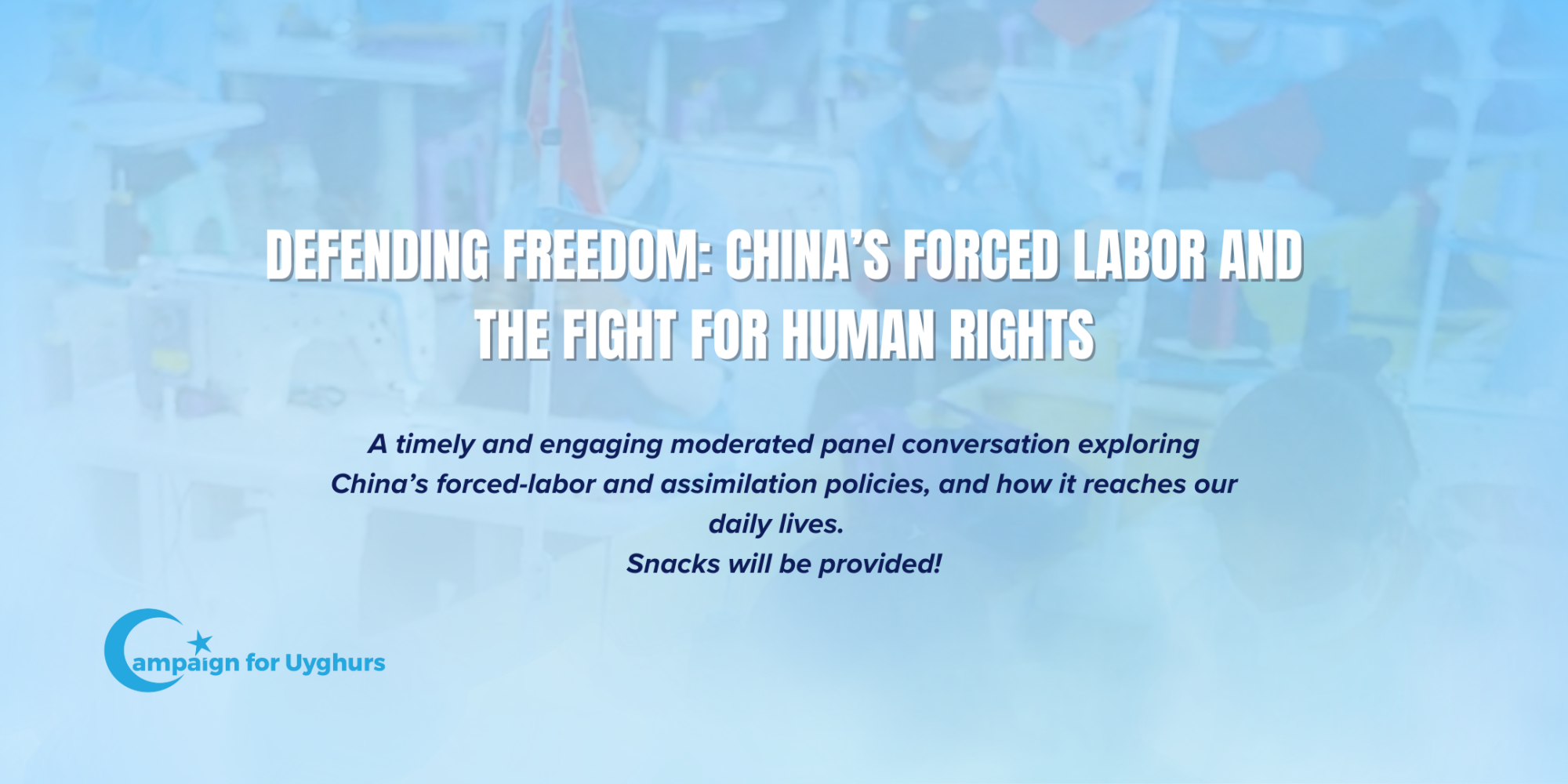
This panel will examine what it means to defend freedom and human rights in an increasingly interconnected global economy. Speakers will present the latest findings on China’s forced labor system, draw on witness testimonies, examine its links to broader crimes against humanity carried out by the CCP, and trace how goods produced through coercion enter global supply chains. The discussion will also explore international mechanisms to address and combat forced labor, including opportunities for governments and international institutions to strengthen enforcement and how consumers can play a role in demanding responsible supply chains. The panel will explore how these efforts can disrupt forced-labor systems, strengthen accountability, and ensure that global economic relationships do not enable or normalize human rights abuses.
Venue:
Studio Jablonski
Jablonskistraße 25
10405 Berlin