Inspired by the Fall of the Berlin Wall: Solidarity with the Persecuted in China

Freedom Knows No Borders: From the Peaceful Revolution in the GDR to International Solidarity Against Human Rights Violations in China
1989. Two Paths—Freedom and Oppression.
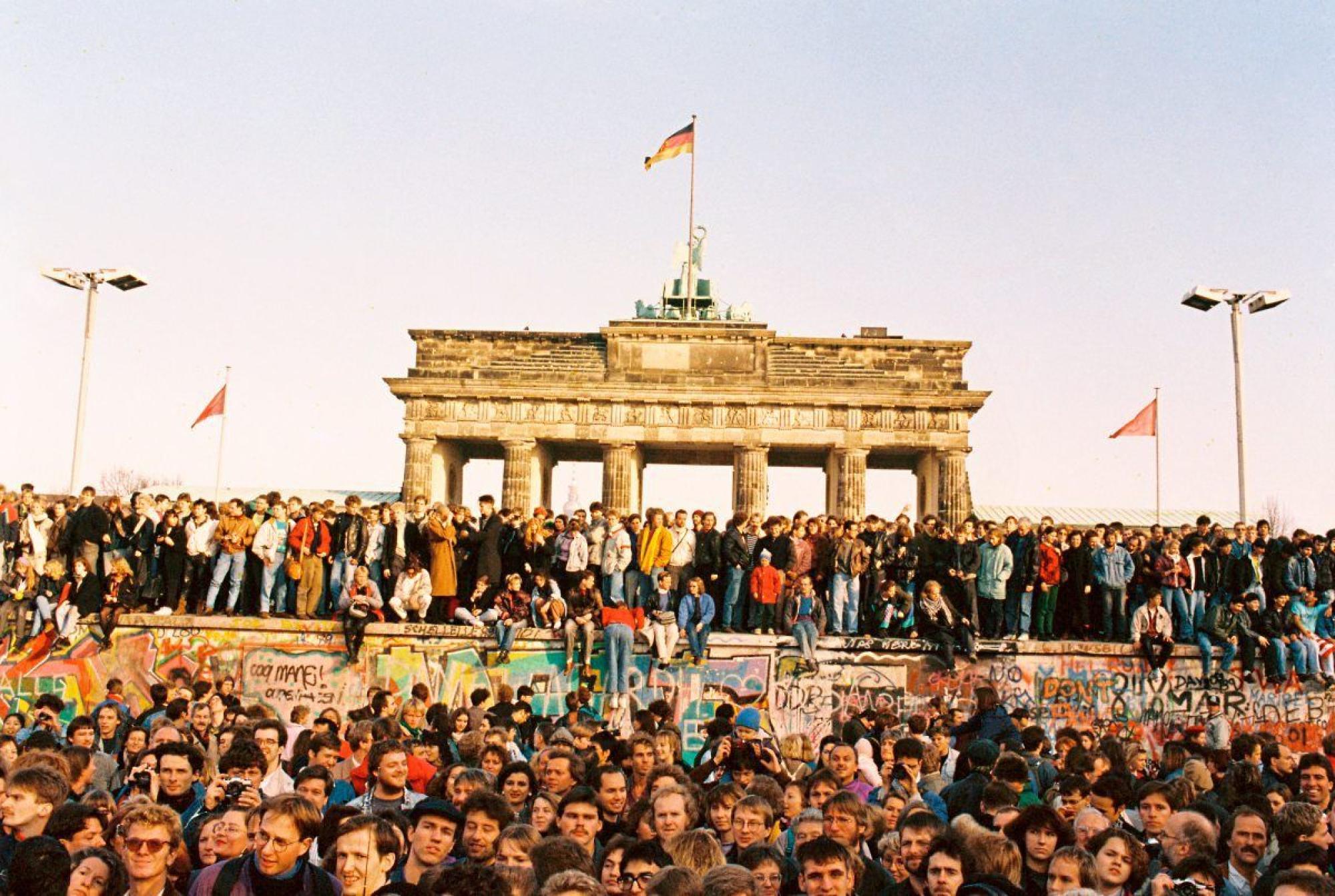
The year 1989 marked a historic turning point that shaped the fates of people in the former GDR and in China in different ways. While the Peaceful Revolution in the GDR ultimately led to the fall of the Berlin Wall and the end of the SED dictatorship, the Chinese student democracy movement in Tiananmen Square was brutally crushed on June 4, 1989. Two movements that stood up for freedom, democracy, and human dignity thus experienced two completely different historical trajectories.
What is less well known is that this democracy movement in China also inspired people in the GDR and led to courageous civic engagement. Civil rights activists and democracy advocates from the former GDR protested in front of the former Chinese Embassy in East Berlin against the brutal suppression of the student protest movement. They initiated letters of protest to the Chinese Embassy, thereby sending a message of international solidarity—at a time when they themselves were still living under the SED dictatorship before the fall of the Berlin Wall.
This commitment entailed considerable personal risks. The activists found themselves in the crosshairs of both the GDR regime and the Chinese Communist authorities. Yet despite surveillance, intimidation, and political persecution, they maintained their courage, their optimism, and their conviction in the universal validity of human rights.
That same year, the Berlin Wall fell. The Peaceful Revolution became a historic triumph for freedom and democracy.
2024. Human Rights Unite—Solidarity Across Borders.
Thirty-five years after the fall of the Berlin Wall, the same civil rights advocates and democracy activists from the former GDR continued their efforts.
On International Human Rights Day, December 10, 2024, they organized a protest in front of the Chinese Embassy at Jannowitzbrücke in Berlin, calling for the immediate and unconditional release of Chinese tea farmer Ding Yuande, who was persecuted in China for his belief in the Chinese meditation practice Falun Gong and sentenced to three years in prison without legal grounds.
Together with supporters from German civil society, they sent a joint protest letter to the Chinese Embassy in Germany. Their appeal was closely linked to the European Parliament’s resolution adopted on January 18, 2024 (P9_TA(2024)0037) condemning the ongoing persecution of Falun Gong practitioners in China and calling for the release of Mr. Ding Yuande, which condemned the ongoing persecution of Falun Gong practitioners in China, demanded the immediate and unconditional release of Mr. Ding Yuande, and called for specific sanctions against those involved in the persecution. This was the first time in the history of the EU that the European Parliament had adopted a resolution in support of a Chinese farming family.
This international solidarity has made it clear that civic engagement, parliamentary advocacy, and political pressure can make a difference when combined. The story of the Chinese farming family, the Dings, has become an example of how human rights work can provide concrete support across national borders.
After more than 14 years of separation due to the persecution of Falun Gong, the Ding family was reunited in Germany.
Today. Defending human rights—even across national borders.
The human rights situation in China remains dire. The systematic state oppression of the Uyghur population, the suppression of civil liberties in Hong Kong, the state-sponsored campaign to eradicate the Chinese meditation practice Falun Gong, and the crackdown on Chinese human rights lawyers are all manifestations of serious and ongoing human rights violations by the Chinese Communist regime.
Furthermore, for years the Chinese Communist regime has also been targeting religious and spiritual communities, as well as Chinese dissidents and critics of the government, outside of China. This includes transnational repression, intimidation, surveillance, and espionage activities by the Chinese Communist regime. Such activities not only constitute an expansion of persecution against those affected but also jeopardize the sovereignty of democratic states, the rule of law, and the security of their societies..
Against this backdrop, the event—held as part of Berlin Freedom Week—brings together former civil rights activists from the GDR with those affected by and survivors of the persecution of Falun Gong, representatives of the Uyghur population, and victims of transnational repression and espionage activities by the Chinese Communist regime.
In a joint panel discussion, they will share their experiences and discuss how democratic societies, parliaments, governments, and international civil society can take more effective action against human rights violations in China.
The discussion will focus on the following questions:
- What lessons can we draw from the Peaceful Revolution of 1989 for today’s efforts to promote freedom and democracy?
- How can former civil rights activists from the GDR contribute their experiences to international human rights work?
- How can Germany and Europe more effectively protect human rights defenders from transnational repression and espionage activities by the Chinese Communist regime?
- What political, legal, and social measures are necessary to end the systematic persecution of religious and spiritual communities as well as ethnic minorities in China?
- How can the international community consistently defend human rights and prevent economic interests from taking precedence over fundamental human rights?
202X. A free China. A shared responsibility.
The events of 1989 have shown that freedom and democracy cannot be taken for granted. Freedom does not come for free. It requires people who have the courage to stand up for their convictions—even when doing so means taking personal risks.
The Peaceful Revolution in the GDR proved that social courage and nonviolent resistance can overcome a dictatorship. Solidarity with the people in China who are fighting for freedom, democracy, and human dignity is therefore not only a sign of human solidarity, but also a historical and democratic responsibility.
Human dignity unites us. Human rights are universal. Freedom is indivisible.
A free world needs a free China—a China where people can express their opinions, practice their faith, and live in freedom and dignity without fear of persecution.
Program
- Opening Remarks
Michael Heinisch-Kirch, Chairman of the Board of the Robert Havemann Society and the SozDia Foundation Berlin - Written Message of Greeting
Frank Ebert, Berlin Commissioner for the reappraisal of the SED dictatorship - Keynote Address:
Stefan Müller, former GDR dissident
Special Guests:
- Ding Yuande, Chinese political prisoner and survivor of the persecution of Falun Gong
- Ding Lebin, human rights activist and independent researcher on China
- Haiyuer Kuerban, director of the Berlin office of the World Uyghur Congress
Podiums discussion:
- Stefan Müller, former East German dissident
- Michael Heinisch-Kirch, former East German dissident and recipient of the Federal Cross of Merit
- Haiyuer Kuerban, director of the Berlin office of the World Uyghur Congress
- Ding Lebin, human rights activist and freelance China scholar
Moderation:
Gerrit Hofert, Advisor to the Executive Board of the Society for Threatened Peoples