Criticism of Discrimination in Times of Backlash—Challenges for Civic Education

We are currently witnessing a social and political backlash worldwide: The recognition of human diversity as a human rights principle is being called into question, as is the understanding that discrimination does not consist solely of individual attitudes and actions, but is deeply embedded in social structures and institutions. Achievements and approaches that in recent years were linked to the hope for greater participation and awareness of discrimination—such as diversity mainstreaming or processes within organizations aimed at addressing discrimination—are coming under pressure. At the same time, the question arises as to how profoundly these approaches have actually changed social and institutional structures.
These developments also challenge political education to take a critical look at itself: What significance does criticism of discrimination hold for its self-conception, its institutional structures, and its pedagogical practice? What role do the attitudes and stances of the individuals involved play in this? Points of reference for this examination include a human rights-based understanding of an effective prohibition against discrimination, as well as a substantive concept of criticism that views political education not only as instruction but also as a space for societal self-reflection.
In this context, it is worth taking a closer look at the growing importance of prevention-oriented approaches in political education. Prevention and criticism follow different perspectives: Prevention often focuses on specific groups or phenomena that are addressed as potential threats and aims to prevent predefined risks. Critical political education, by contrast, examines social conditions, structures of power and inequality, and how these are produced, perpetuated, and transformed. It includes its own position and practice in this inquiry and regards society’s future as fundamentally open and malleable.
This half-day symposium invites participants to discuss these tensions together. The focus is on the question of what constitutes political education critical of discrimination under current social conditions—and what consequences this has for its self-understanding, its structures, and its concrete practice.
Participation is free of charge. Please register online.
You can find the detailed program and registration information at the link below.
Event in German.
Location:
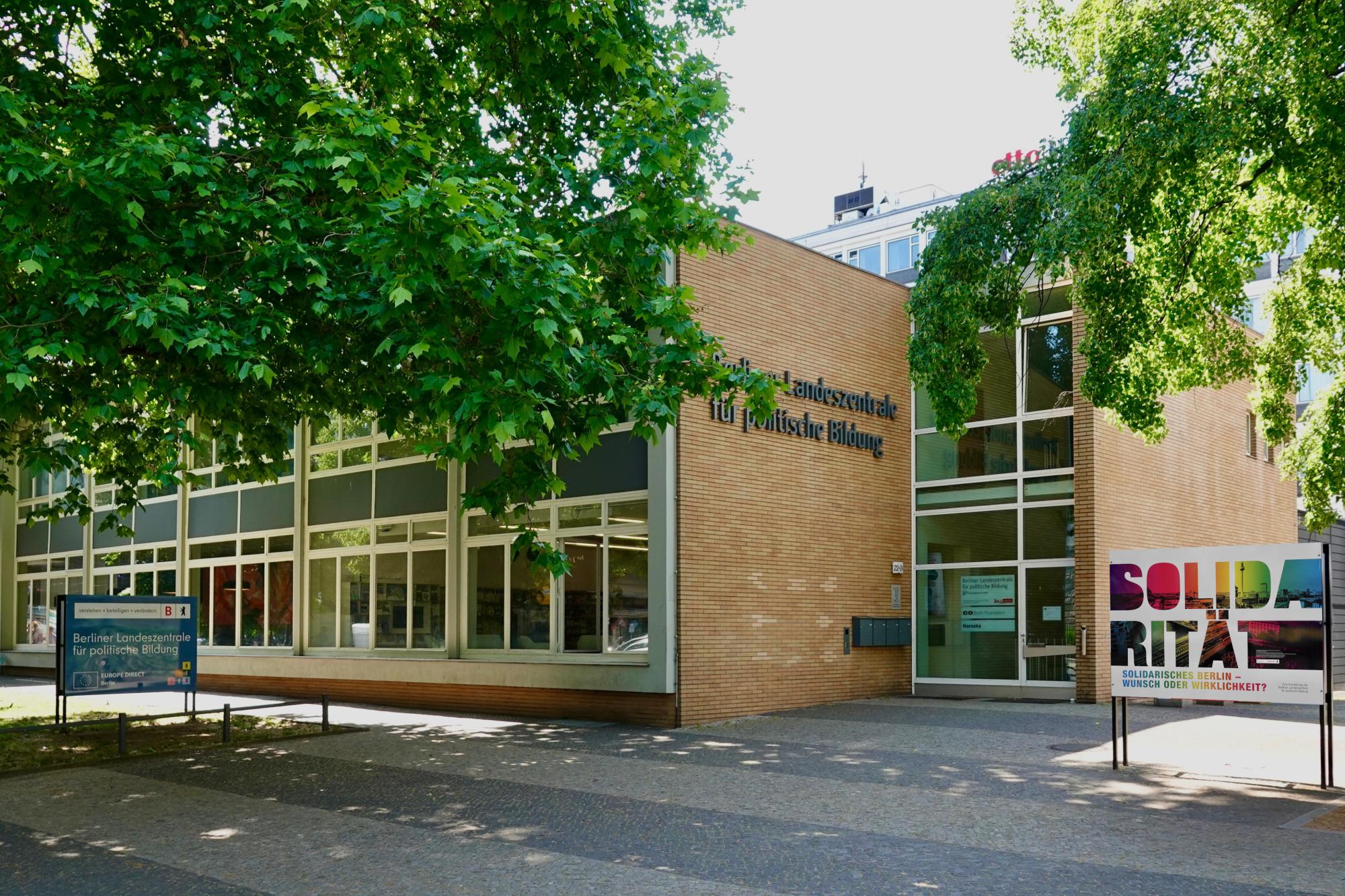
Berliner Landeszentrale für politische Bildung
Hardenbergstraße 22–24
10623 Berlin